At Truemind Capital, our broad understanding has been:
- Diversification across asset classes, sectors and geographies helps manage risk.
- Wealth preservation remains as important as wealth creation, particularly in uncertain markets.
- Asset allocation needs to remain dynamic, with portfolios actively rebalanced as opportunities and risks evolve.
- Maintaining liquidity within portfolios remains critical, enabling timely shifts and effective deployment during market dislocations.
If the April-June quarter ended with hopes of peace, July-September showed how quickly the situation could change. Brent crude, which had fallen to around US$72-73 a barrel by the end of June, climbed above US$100 in July and reached around US$109 in mid-September as tensions in West Asia flared again. The renewed rise in oil prices brought inflation, interest rates and pressure on the rupee back into focus.
Equity Market Insights:
Indian equities had a difficult quarter. The Sensex and Nifty 50 each declined by around 5.2% between July and September, with much of the fall coming in September. Higher crude oil prices, rising US bond yields, a weaker rupee and renewed foreign investor selling weighed heavily on sentiment. Domestic institutional investors provided some support, but this was not enough to prevent the decline.

The current weakness also needs to be seen in the context of the past two years. The Sensex closed at approximately 84,300 on September 30, 2024, after a strong bull run that had taken the index to fresh record highs. By September 30, 2026, it had fallen to around 72,480, leaving it roughly 14% below its level two years earlier. For investors, this has been a prolonged period of limited progress. We believe the way forward depends largely on corporate earnings.
The quarter gone by also reinforces a concern we had highlighted earlier: revenues may grow, but higher costs can prevent that growth from translating into stronger profits. Nifty 50 revenue grew 18.4% year-on-year, while operating margins for non-financial companies contracted by around three percentage points to 20.5%. Profit growth stood at 11.8%. Earnings growth estimates for FY27 were also revised down to 9.2%, from 16.4% in March.
This is why a market correction alone is not enough to make equities attractive. Valuations need to be considered alongside the earnings companies can realistically deliver. We would look for a sustained improvement in earnings before expecting a stronger and more durable recovery in Indian equities.
In the US, the S&P 500 gained around 2% during the quarter, but the rally remained concentrated in large technology companies and AI-related themes. At the same time, market leadership began to broaden, with investors showing greater interest in opportunities beyond some of the most crowded AI-related trades. This does not mean that the long-term potential of AI has disappeared. However, the scale of investment, high expectations and questions around how sustainably these investments will generate returns make it important to assess valuations and risks carefully.
For investors, the lesson is not to react to every change in market sentiment. We continue to believe that oil prices, interest rates and currency movements can affect markets in ways that individual stock selection cannot fully offset. Diversification, reasonable valuations and adequate liquidity remain important, particularly when the outlook is this uncertain.
What We Are Doing
We continue to maintain equity allocations in the 30-60% range, depending on individual risk profiles, with a preference for large-cap and value-oriented investments diversified across sectors and geographies.
One development we have been paying close attention to is the changing investor appetite for AI-related investments. The opportunity presented by AI remains significant, but the valuations of some companies, the scale of capital being committed to infrastructure, and questions around how quickly those investments will generate returns have made the trade more vulnerable to changing expectations. The concern is not necessarily that demand for AI will disappear, but that the prices investors are willing to pay for that growth may become, economically, harder to justify.
This is also why we believe portfolios should not depend excessively on any one market, sector or investment theme. Rather than trying to predict when the next shift in market leadership will occur, we are focused on diversifying across geographies and identifying opportunities driven by different sources of growth. Our international portfolios provide exposure to markets such as Hong Kong and China, Singapore, Brazil, the UAE and Japan, while our healthcare allocation offers exposure to businesses addressing real-world needs beyond the AI infrastructure cycle.
With valuations remaining demanding in parts of the market, we continue to favour patience over chasing momentum. Maintaining liquidity and reviewing portfolios as conditions change allows us to act when more attractive opportunities emerge, while keeping investments aligned with clients’ long-term objectives.
Debt Market Insights:
One of the important developments during the July-September quarter was the sharp rise in government bond yields across major economies. The US, UK and Japan all saw borrowing costs climb to levels not seen in years, as investors reassessed the outlook for inflation, interest rates and government borrowing. India was not insulated from this trend. Its 10-year government bond yield rose from around 6.75% at the end of June to approximately 7.19% by September 30.
For India, this came at a time when the outlook for inflation was becoming more uncertain again. The rise in crude oil prices raised concerns about imported inflation, while a weaker rupee added to the pressure. At the same time, higher yields in developed markets made global investors more sensitive to the returns available across countries. This created a challenging backdrop for Indian bonds, even as measures to attract foreign capital began to improve inflows.
Net non-resident deposit inflows reached US $ 119.2 billion between April and August, compared with US $ 5.6 billion during the same period a year earlier. However, stronger inflows did not prevent longer-term bond yields from rising. Global interest-rate movements, inflation concerns and foreign investor selling continued to weigh on the market.
Domestic liquidity also played a role. Strong deposit inflows contributed to surplus banking-system liquidity, which the RBI absorbed through its liquidity operations. This led to a steeper yield curve, helping ease some short-term rates, even as longer-term government bond yields rose.
Our Approach to Debt Allocation
For us, the combination of elevated global bond yields and renewed inflationary pressures in India calls for caution on the interest-rate outlook. The RBI’s 25-basis-point repo rate hike to 5.50% on October 7, after the quarter ended, reinforces the importance of this risk. We believe interest rates could remain elevated, with further hikes possible if inflationary pressures persist. This is one reason we have been cautious about taking aggressive positions in longer-duration debt.
At Truemind Capital, we have consciously avoided aggressive duration calls over the past two to three years. The developments during this quarter reinforced the rationale for this approach. With inflationary pressures high, geopolitical risks elevated and bond yields rising across major economies, we believe it is important to remain measured about how much interest-rate risk portfolios take.
We continue to favour short- and intermediate-duration instruments that offer a balance of yield, liquidity and lower mark-to-market risk. The 10-year G-Sec yield rose from around 6.70–6.75% in July to approximately 7.15-7.20% by late September. One-year CDs were offering yields of around 7.45–7.55% as of mid-October. These higher yields have improved the income available from debt investments compared with a few months ago. However, with the RBI having raised rates and the possibility of further hikes remaining, we see no compelling reason to extend duration aggressively yet.
Debt remains an important stabilising anchor in a portfolio, providing regular income, helping preserve capital during uncertain periods and creating the flexibility to rebalance into equities when markets offer value.
Other Asset Classes:
Gold: Domestic Gold ETFs delivered a steady return of 4.81% during the July-September quarter, pushing their trailing 12-month return to an impressive 26.85% as of September 30, 2026.
The asset class continues to prove its vital role as a structural portfolio anchor. Even as precious metals faced short-term global profit-taking in late September due to a surging US dollar index, investor appetite reached an inflection point. Domestic net inflows into Indian gold ETFs surged by 71% month-on-month to hit Rs 4,451 crore in September, as capital actively sought refuge from a correcting equity market.
We continue to maintain gold as a key non-correlated diversifier, structurally underpinned by aggressive multi-year central bank accumulation.
Real Estate: Housing sales across the top seven cities rose about 3% YoY in July-September, a turnaround from last quarter’s 6% fall. New launches rose 18% and prices 7%. With launches running well ahead of sales, unsold inventory is up about 12%. We continue to view real estate as a complementary, not core, allocation given its illiquidity, cyclical nature and high transaction costs.
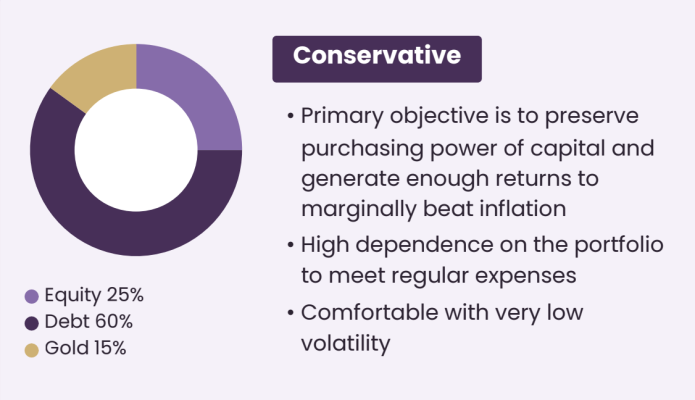
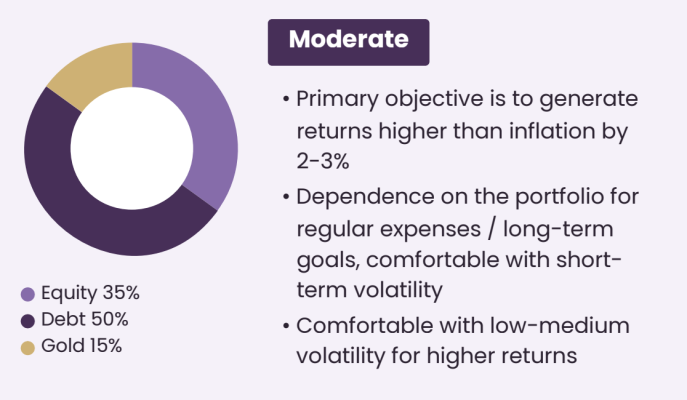
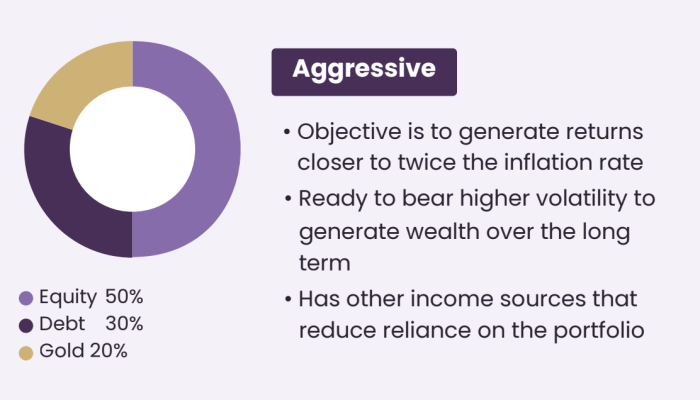
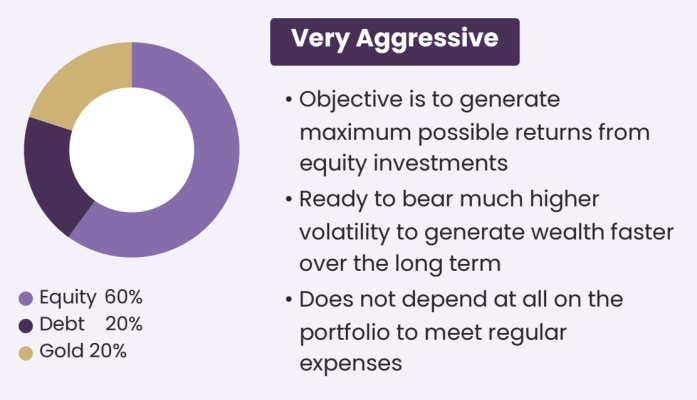
Truemind’s Model Portfolio – Current Asset Allocation
Personal Finance Capsule:
Macro-calls that worked and will continue to work
Interesting Global Themes Beyond Indian Markets
Why SEBI RIAs are the Best Bet for Investors
At Truemind Capital, we help people achieve peace of mind by managing their financial planning and investments in India and globally diversified portfolios.
For an introductory call, reach out to us at: https://www.truemindcapital.com/contact-us